

Explore Books
Community
Shipping Details
FAQs
Blogs
Parent Resources
Contact Us
Track Your Order
Handcrafted with care, for your little ones. Happy reading!
How Our Books Work
NEST is a mindful children’s brand creating gentle, psychology-backed stories that nurture connection, habits, emotions, and values during the most important early years.
The SPARK Framework
How our stories turn reading into real-life learning
SPARK is the simple framework behind every NEST story. It’s designed around how young children naturally learn — by watching, feeling, copying, and repeating. Instead of teaching through instruction, SPARK helps values and habits grow through storytelling and everyday moments.
.png)
S
- Select a Role Model
Children learn best by observing people they admire. We begin by choosing gentle, relatable role models — characters children feel safe with and naturally want to imitate.
.png)
P
- Present the Story
Stories are introduced through familiar routines and emotions. By grounding stories in everyday childhood moments, children immediately relate and stay engaged.
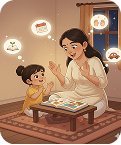
A
- Act it Out
Learning deepens when children participate. Our stories invite movement, expression, and role-play — turning listening into lived experience.
.png)
R
- Reinforce the Action
Positive behaviour is gently reinforced through warmth, appreciation, and repetition. This helps children associate good habits with comfort and connection, not pressure.
.png)
K
- Keep Repeating
Repetition builds familiarity, confidence, and understanding. Over time, children don’t just remember the story — they begin to live it and retell it in their own way.
Value of Re-reading
Children learn through repetition — not because they forget, but because familiarity helps meaning settle in. When a story is read again and again, children begin to notice more, feel safer, and connect deeper. The words become predictable, the emotions familiar, and the moments comforting.
At NEST, our stories are designed to grow with each re-read. What begins as listening slowly becomes participation — pointing, repeating lines, acting out moments, and eventually retelling the story in their own way. Re-reading turns stories into rituals, builds emotional understanding over time, and helps children carry values gently into everyday life.

How to Use the Books


Storytelling Philosophy
At NEST, we believe storytelling is one of the oldest and most powerful ways humans have passed on wisdom, values, and understanding — long before classrooms or screens existed.
From epics like the Ramayana and Mahabharata to everyday family stories, generations have learned through listening, imagining, and reflecting together. These stories have shaped culture, character, and connection for centuries.
We see this tradition not as something of the past, but something to be thoughtfully renewed for today’s children. Rooted in our cultural stories and guided by early childhood psychology, our storytelling is designed to be gentle, relatable, and age-appropriate. By reimagining timeless stories through a child’s everyday world, we help children grow with emotional strength, values, and meaning — keeping the human spirit alive through stories that continue to be shared, remembered, and lived.

Mythology / Cultural Inspirations
At NEST, mythology is not about teaching history or religious texts — it’s about passing on timeless values through stories children can relate to.
For generations, stories from the Ramayana, Mahabharata, and other cultural traditions have shaped character, empathy, and a sense of right and wrong. We see these stories as living wisdom, not distant epics.
Our approach is to gentlreplace the complexity with familiarity, and symbolism with emotions children already understand.
Heroes become role models children can imitate, and big ideas are expressed through small, relatable moments. Rooted in culture and shaped for modern childhood, our stories help children connect with values in a way that feels natural, safe, and meaningful.
Emotional Development
At NEST, we believe emotional development is the foundation of everything that comes later. Before children can manage tasks, absorb knowledge, or face challenges, they need to understand their feelings and feel safe expressing them. Emotions are not distractions from learning — they are how learning begins.
Through gentle storytelling, familiar situations, and relatable characters, our stories give children language for emotions like joy, fear, disappointment, kindness, and courage. By seeing these feelings reflected in everyday moments, children learn that emotions are natural, manageable, and worth talking about. Supported by shared reading and simple parent interaction, emotional understanding grows slowly and securely — shaping children who are not just prepared for the future, but grounded within themselves.